A few years ago, after winning a major championship, a superstar quarterback was interviewed live on national television. He had everything our culture celebrates—fame, money, respect, a trophy in hand. Yet his words stunned everyone: “People think success fixes everything. But the truth is, I’ve never felt more anxious or more unsure of myself.”
On the outside, victory.
On the inside, a quiet struggle no one could see.
Most of us know someone like that. Some of us are someone like that. Life teaches us that you can hold a trophy and still feel empty. You can climb the ladder and still feel lost. You can be admired publicly and broken privately.
That is exactly where Scripture introduces Naaman in 2 Kings 5. He is everything people admire—commander of the army, respected by the king, successful in battle, a man of valor. If life were a résumé, his was flawless. But Scripture adds one painful phrase: “He was a mighty man of valor… but he was a leper.”
Beneath the armor was a sickness he could not hide and could not fix. And that is why Naaman’s story reaches straight into our world today. It reminds us that you can be accomplished and still broken, admired and still empty, put-together and still in desperate need of God’s healing.
And beautifully, God begins Naaman’s redemption not through a king, not through a prophet, not through a miracle—but through a servant girl. A child. Someone the world would overlook. Her small, humble voice becomes the doorway to everything God wants to do in Naaman’s life. God uses the humble, and He heals the humble.
A Successful Man with a Secret Sickness
Naaman had rank, wealth, and the respect of nations—but beneath the shining armor was a terminal condition. Scripture reminds us that worldly success can never fix spiritual sickness. You can achieve much and still be deeply broken. Romans 3:23 echoes this truth: “For all have sinned and fall short of the glory of God.”
And then comes the surprising hero of the story—a captured servant girl, young and powerless by worldly standards. Yet she speaks hope: “If only my master could see the prophet in Samaria! He would cure him.” God delights to use unexpected voices to direct us toward hope. Weakness becomes the instrument of God’s strength.
Pride Almost Blocks the Blessing
Naaman does what powerful people do—he tries to buy his healing. He brings silver, gold, clothing, and a royal endorsement. But human achievement cannot purchase what God gives freely. Salvation is not earned; it is received (Ephesians 2:8–9).
Then Naaman becomes offended by God’s simple instructions: “Go wash in the Jordan seven times.”
He wanted spectacle… prestige… complexity… something worthy of a hero. Instead, he got a simple command that wounded his pride.
Pride says, “I deserve better.”
Pride says, “I know better.”
Pride says, “Let me fix this myself.”
But the gospel confronts our pride. Healing is not found in our greatness but in our surrender.
Naaman reminds us of the person who refuses antibiotics because they “don’t like pills”—offended by the simplicity of the cure. The greatest barrier to healing is not the illness but the pride that refuses God’s way.
Humble Obedience Opens the Door to Healing
It is here Naaman’s servants step in. They call him back to humility: “If the prophet had asked you to do something great, wouldn’t you have done it?” Sometimes the greatest grace God gives us is a voice of truth from someone we overlook.
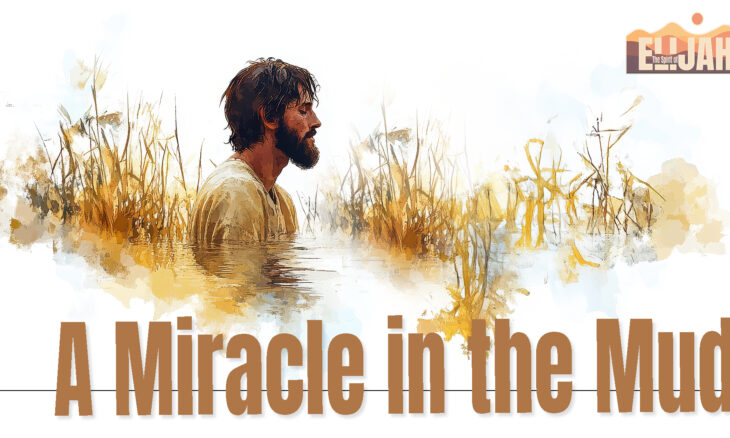
Naaman finally submits. He dips in the muddy Jordan seven times, and on the seventh, his skin becomes like that of a child. Cleansed. Restored. Healed.
God often works miracles through simple obedience:
- Noah builds
- Abraham goes
- Disciples cast the net again
- Believers repent & are baptized
Sometimes the hardest commands are the simplest: pray, forgive, repent, surrender, trust. Naaman’s healing teaches us that divine power flows through humble obedience.
Where Do You Need to Humble Yourself?
After his healing, Naaman returns and confesses, “I know that there is no God in all the earth but in Israel.” His physical healing leads to spiritual transformation.
Naaman’s story becomes a mirror for our own:
- Where am I wrestling with pride?
- What simple step of obedience am I resisting?
- Who has God placed in my life to speak truth that I’ve been ignoring?
Jesus is the greater healer who washes us—not in the Jordan but through His own blood. We come like Naaman: broken, proud, wanting answers on our terms… and we find cleansing, grace, and new life on God’s terms.
The path to healing still begins at the same place it did for Naaman: “Humble yourselves before the Lord, and He will lift you up.” (James 4:10)